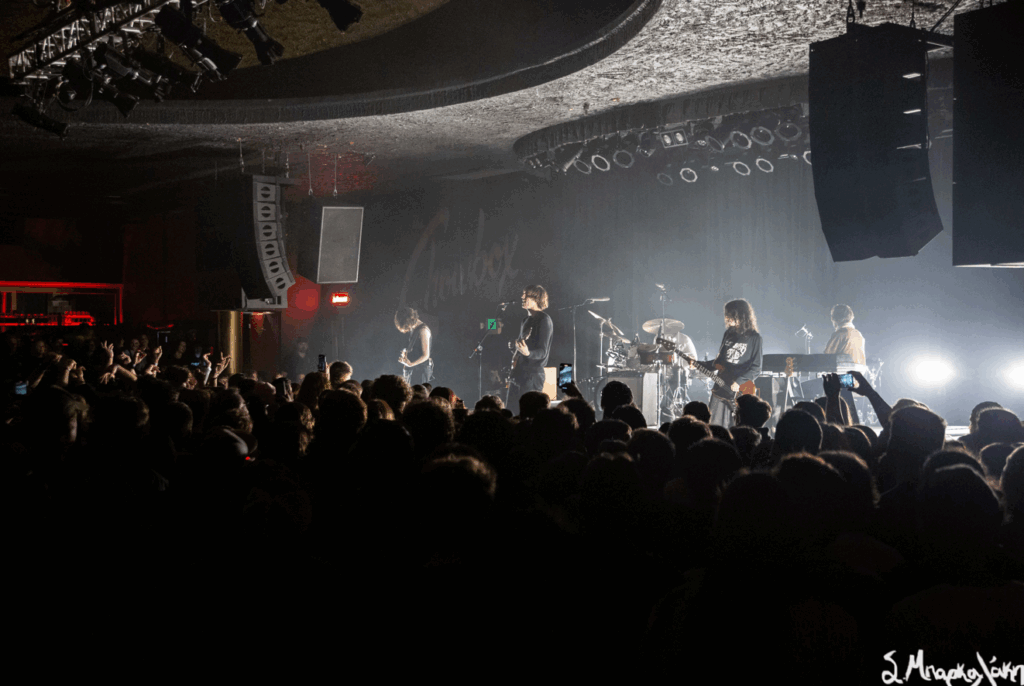
Geese “Getting Killed” in Seattle
Seattle’s Showbox Market was sold out and vibrating with anticipation as Geese, Brooklyn’s most unpredictable art-rock export, brought their Getting Killed Tour to the city for the very first time. Fans packed the historic venue shoulder-to-shoulder, buzzing for a band that has become synonymous with chaos, beauty, and reinvention.
Before Geese unleashed their sonic chaos, the night began with Racing Mount Pleasant, a seven-piece indie art-rock collective from Ann Arbor, Michigan. Formerly known as Kingfisher, the band rebranded in 2025 and released their self-titled sophomore album in August—a sprawling, cinematic work blending chamber pop, post-rock, and folk influences. Their lineup is as eclectic as their sound: Sam DuBose (vocals, guitar), Casey Cheatham (drums), Tyler Thenstedt (bass), Callum Roberts (trumpet, guitar), Kaysen Chown (strings, synth guitar), Connor Hoyt (alto sax, flute), and Samuel Uribe-Botero (tenor sax, piano). With two saxophones, harmonium, and layered strings, their music feels like a motion picture soundtrack—lush, immersive, and emotionally charged.
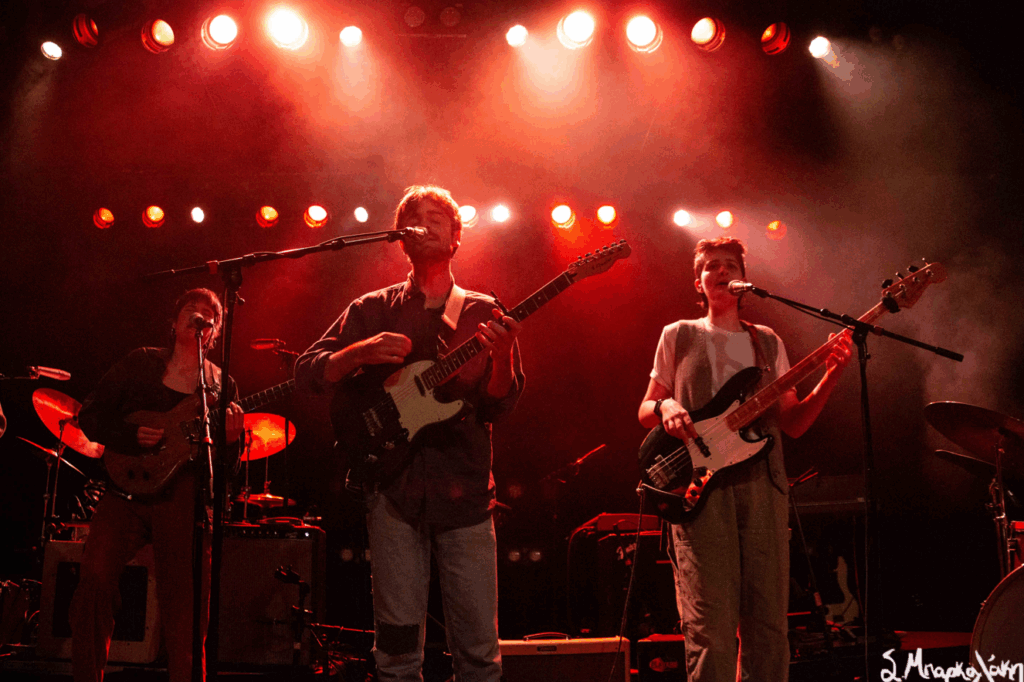
All members stood in a line with the drummer off to the side—a formation that felt more like an avant-garde orchestra than a rock band. The sound was massive, layered, and alive, like a motion picture soundtrack unfolding in real time. Tracks like “Your New Place” and “Call It Easy” showcased their ability to move from hushed intimacy to explosive crescendos, commanding the room with precision and grace. Known for bespoke live shows that often incorporate visual art and projections, Racing Mount Pleasant brought a sense of grandeur to the stage, setting the tone for an evening that would defy expectations. Fun fact: the band’s name was inspired by a highway exit sign reading “Racine Mount Pleasant,” a nod to their love of road trips and serendipity. Their performance proved why they’re quickly becoming one of the most talked-about emerging acts in the indie scene.
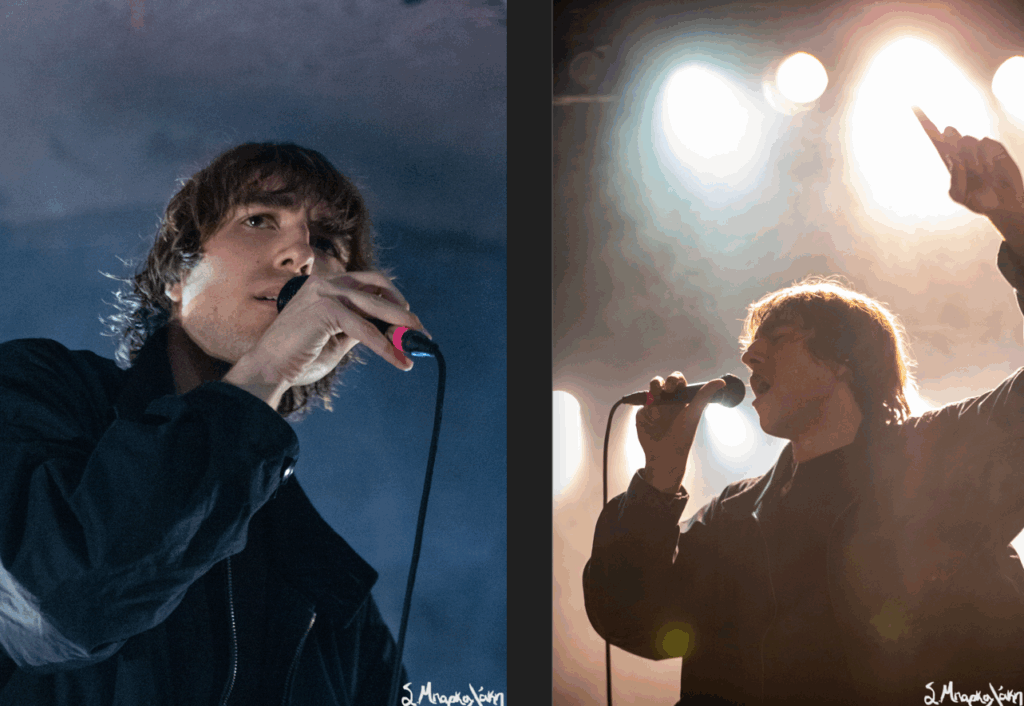
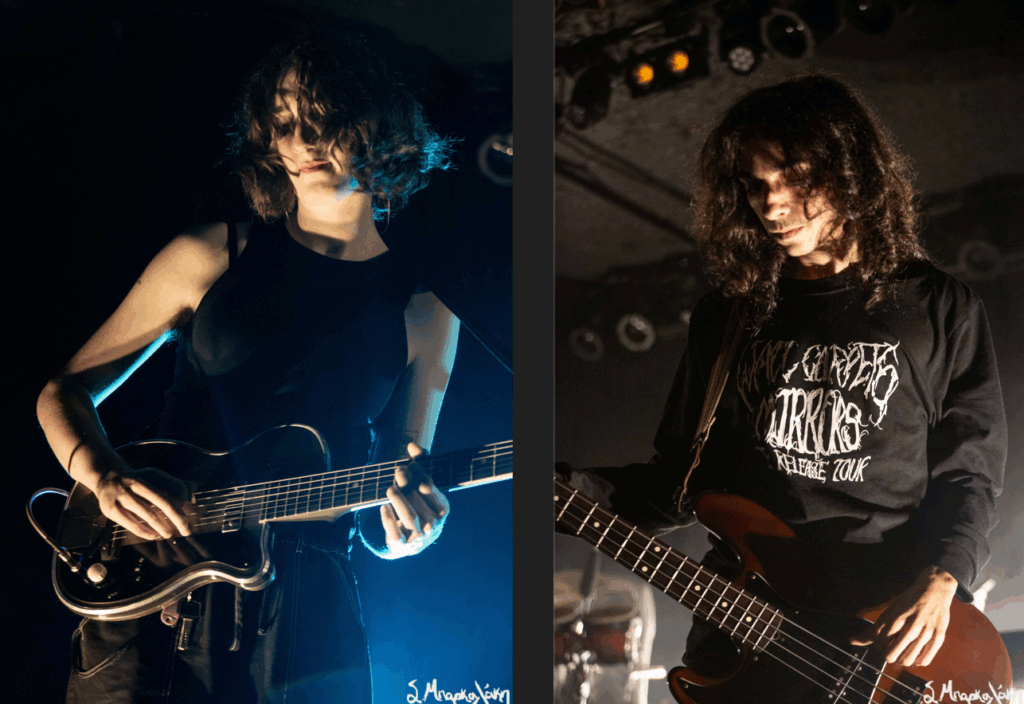
Formed in 2016 by high school friends in Brooklyn, Geese—Cameron Winter (vocals, keys, guitar), Emily Green (guitar), Dominic DiGesu (bass), and Max Bassin (drums)—have carved a reputation as one of the most daring young bands in rock. Their debut Projector was a jagged post-punk statement, followed by the genre-bending 3D Country, which flirted with Americana and art-rock. Now, their third album, Getting Killed (released September 26 via Partisan Records), is a full-throttle plunge into experimental chaos: a record that Pitchfork hailed with a 9.0 rating and described as “anxious, fragmented music as liable to erupt in a paranoid shriek as a bald declaration of love.” Produced with Kenny Beats, the album is a fever dream of jagged riffs, Ukrainian choir samples, and lyrics that oscillate between tenderness and rage. Tracks like “Trinidad,” “Taxes,” and “Cobra” showcase Geese’s ability to make music that feels cinematic, unsettling, and exhilarating all at once.
From the moment the lights dimmed, the crowd began chanting in unison: “Geese! Geese! Geese!” The vibe was unlike any show I’ve attended. Geese didn’t deliver a single mood—they delivered every mood. There were moments of blistering intensity, passages of eerie calm, and stretches that felt suspended in some surreal middle ground. It was disorienting in the best way possible. One minute, the floor was a mosh pit; the next, people were swaying gently, hugging strangers, or lifting friends onto their shoulders. At one point, someone fainted and was carried out, only for the crowd to erupt again seconds later. It was chaos, but it was communal.
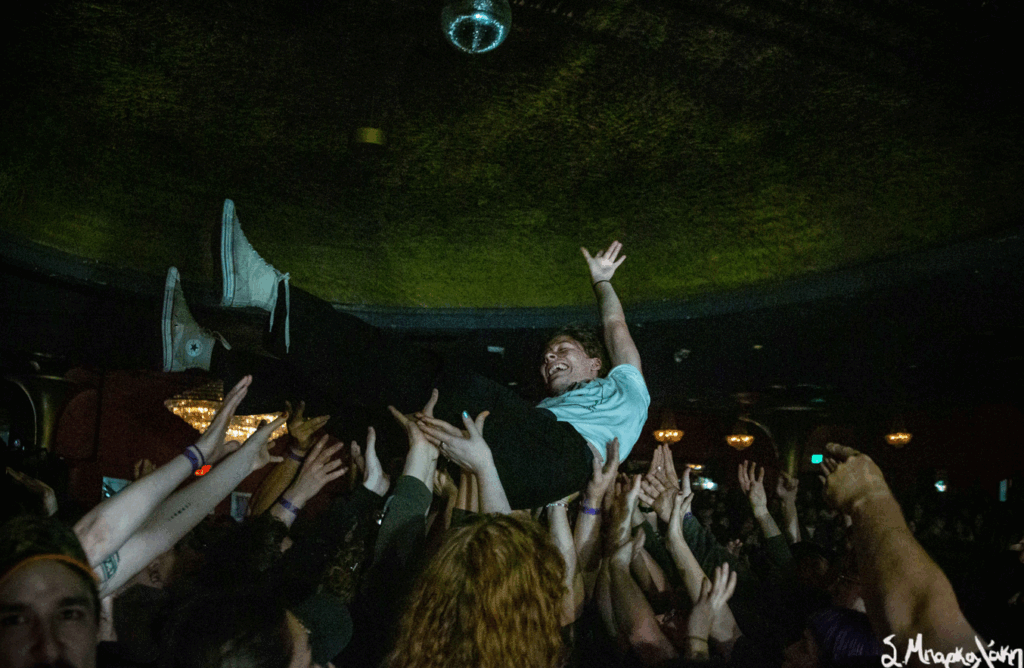
The set opened with “Husbands,” “Getting Killed,” and “3D Country” setting the tone for the night. Between songs, Winter spoke sparingly but powerfully: “Take care of each other. Be kind.” It was a simple directive, but in that packed room—where punks, art kids, and indie diehards mingled without friction—it felt profound. This was the most mixed crowd I’ve ever seen, united by sound. The power of music was tangible, almost spiritual.
By the encore, when fans roared “Geese! Geese! Geese!” again, Winter grinned and joked: “That was amazing—let’s do seven more songs.” They didn’t, but the sentiment captured the night’s delirious energy. They played “Crusades” for the first time on tour that fans were happy to hear. The last two songs were the absolute perfect end to the night.
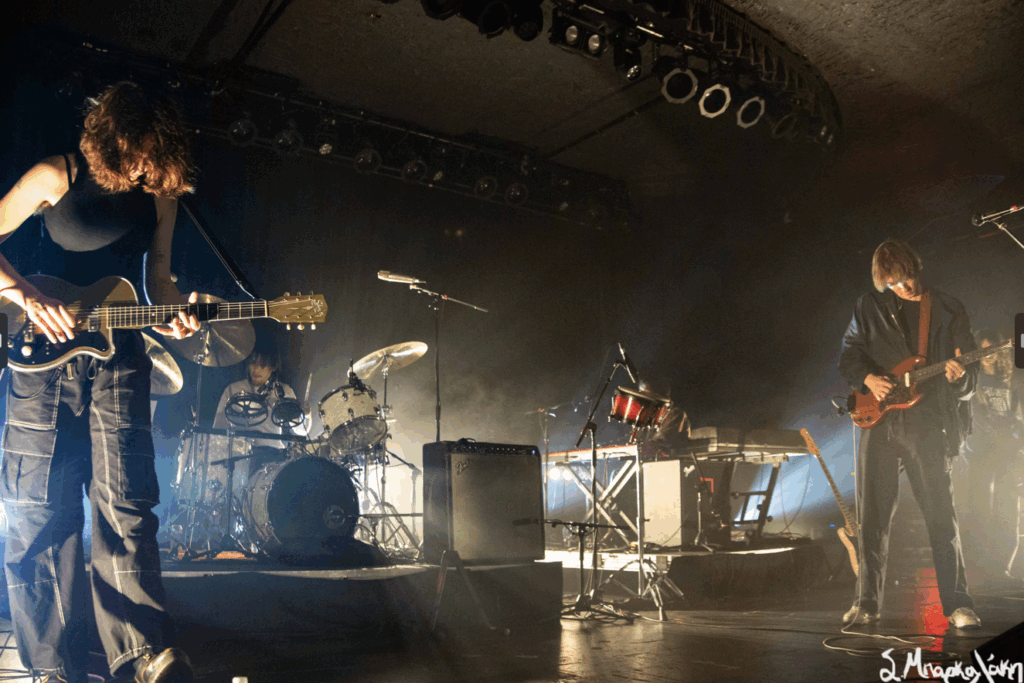
The second song “Tomorrow’s Crusades” was a revelation: a slow build that exploded into a wall of sound, prompting a spontaneous wall of death during each chorus. The set closed with “Trinidad” its irregular time signature and Winter’s wail—“There’s a bomb in my car!”—setting the tone one last time. Winter screamed into the mic—“On and on and on and on and on!”—until his voice cracked, collapsing into catharsis.
The encore was pure release: a final surge of noise and melody that left the audience breathless. As the last notes dissolved into feedback, the room felt ethereal, like we’d all been through something unnameable together. I walked out stunned, unsure of what had just happened—but certain it was special. Geese are not here to give you comfort. They’re here to challenge, to provoke, to remind you that rock can still feel dangerous and transcendent. Getting Killed isn’t just an album—it’s a manifesto of destruction and rebirth. And in Seattle, for one sold-out night, that manifesto came alive.