Goran Bregović: Ouzo, Banana, and Balkan Chaos in Seattle
Some artists carry entire histories with them when they walk onstage, and Goran Bregović is one of the rare few whose legacy feels almost mythic. Born in Sarajevo and rising to fame as the guitarist and songwriter for the Yugoslav rock giant Bijelo Dugme, he later became an internationally celebrated composer whose film scores for Emir Kusturica (Time of the Gypsies, Arizona Dream, Underground) cemented his place as one of the most influential Balkan musicians of the last half‑century. His Wedding & Funeral Band has toured the world for decades, blending Roma brass, Bulgarian polyphony, folk traditions, and rock‑born rebellion into a sound that transcends borders. Now in his seventies, Bregović remains a magnetic force, still releasing new work and continuing a packed 2026 touring schedule across Europe and beyond. Seattle was lucky to catch him on a rare U.S. date, and The Moore Theatre felt charged before the first note even landed.
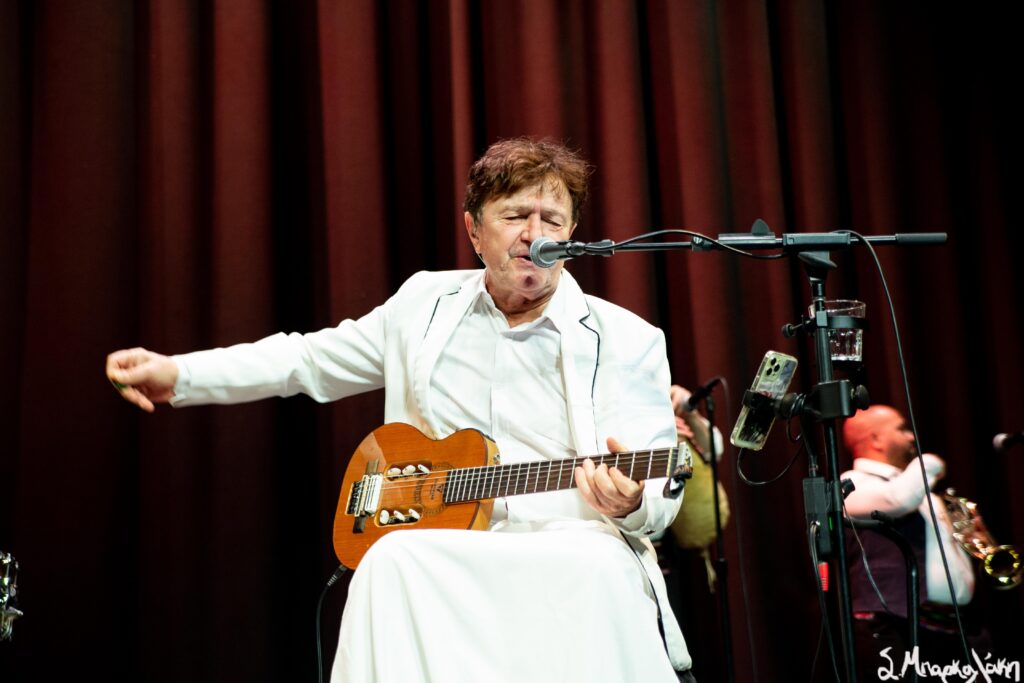
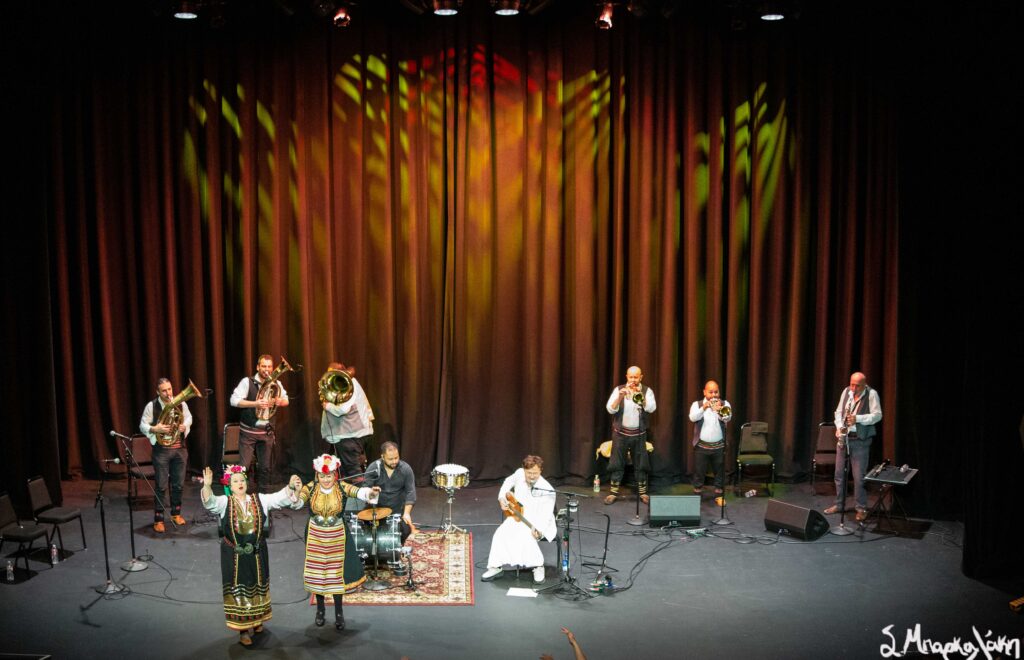
Six musicians and two singers dressed in traditional Eastern European attire, embroidered fabrics glowing under the lights. In the center sat Bregović in crisp white, alongside his drummer‑vocalist in black, the only two seated, like twin pillars grounding the ensemble. The first notes hit with that unmistakable Balkan electricity; the kind that starts in your chest and travels straight to your feet. For the first hour, the audience tried to stay seated, swaying and clapping along, but pathos is a powerful force. As the night progressed, people couldn’t hold it in any longer. They rushed to the front, dancing in the aisles. Security attempted to usher them back, but Bregović’s team waved them off. Let them dance. And suddenly The Moore transformed into a Balkan celebration, a little taste of home for anyone with roots in that part of the world, and a thrilling discovery for everyone else.
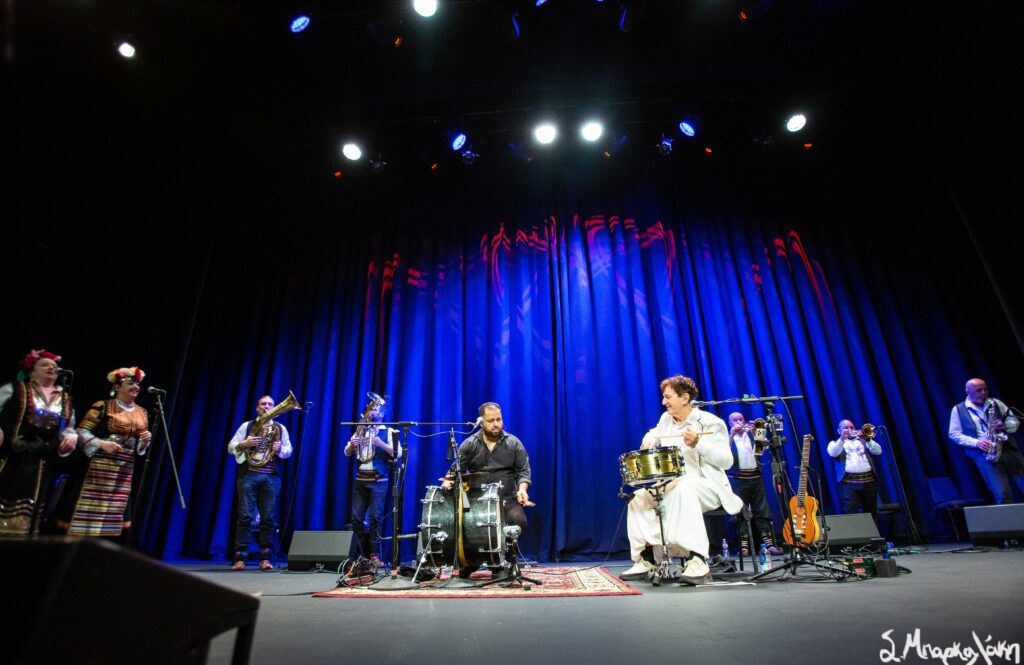
One of my personal highlights was hearing “Ouzo & Banana.” As a Greek, I couldn’t stop laughing, singing, and dancing along. It felt like an inside joke shared across cultures, a reminder of how Balkan humor and music intertwine in the most chaotic, joyful ways. The energy only escalated when the band launched into “Gas Gas,” sending the crowd into a frenzy. Brass lines spiraled through the room, people jumped and spun, and the entire theater pulsed like a living organism.
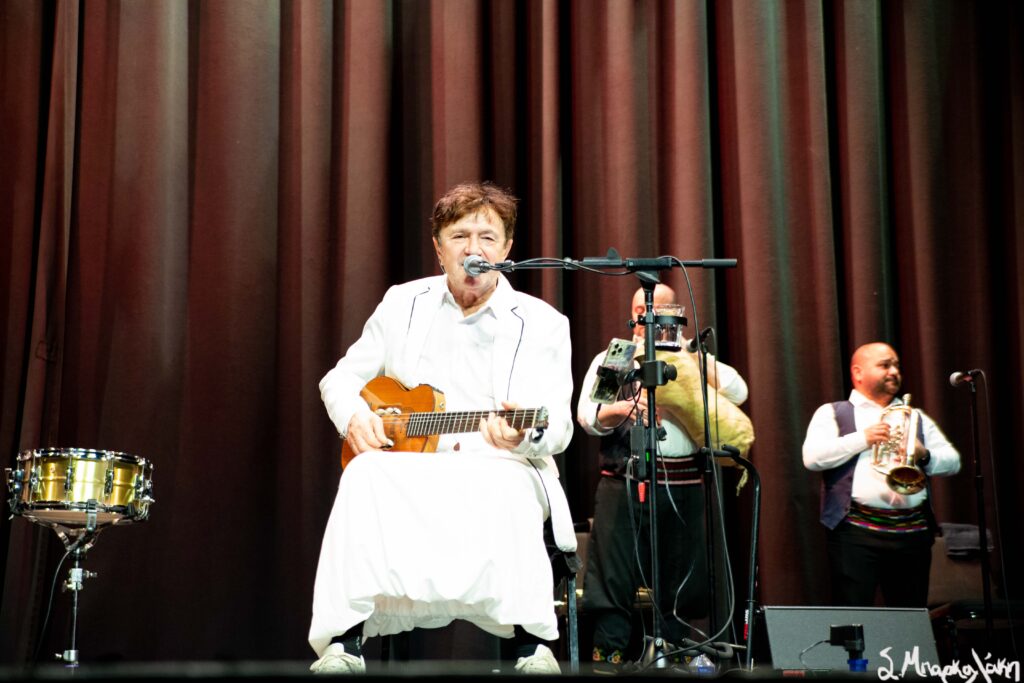
Seeing Bregović live after hearing his music in my teens was a little nostalgic. Part of me expected the man I remembered from then; the long hair, the bronze skin, the youthful swagger from his collaborations with Giorgos Dalaras that played endlessly on Greek TV. I forgot, somehow, that time moves for all of us. He has grown older, yes, but the charisma, the mischief, the spark, all of it remains intact, softened only by the wisdom of decades spent shaping the sound of a region.
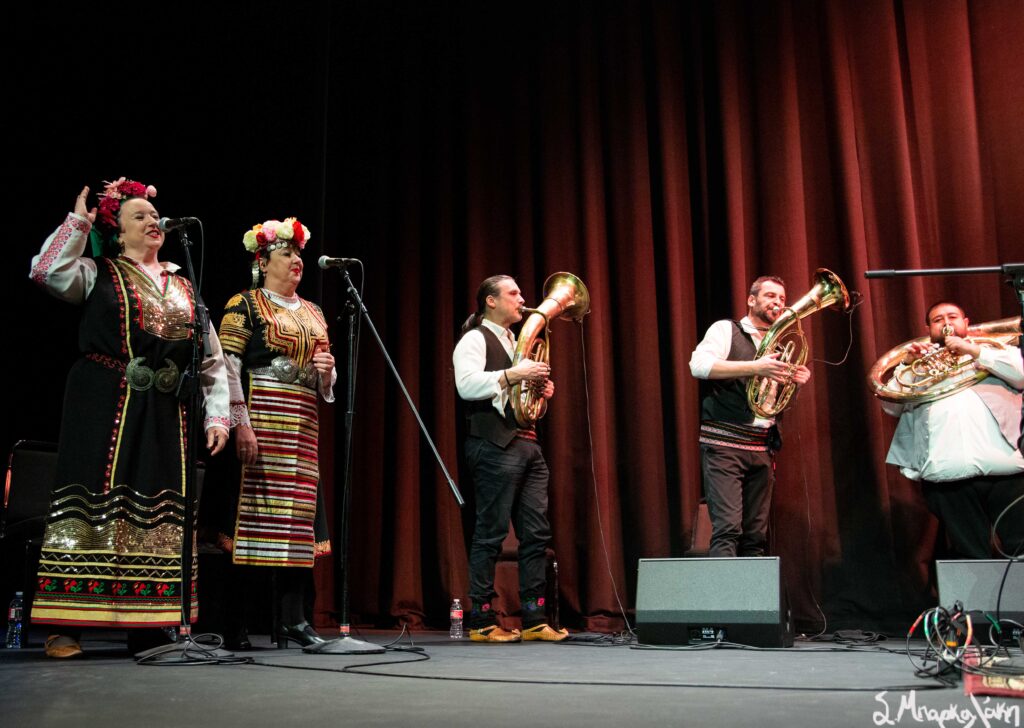
When the main set ended, the crowd erupted for an encore, and Bregović returned smiling. “I like to sing this one when I have a drink or two,” he said. “This is an old Serbian song from World War One, cheers to your health.” He launched into “Artileria,” and the audience sang as if they’d known it forever. Then came “Bella Ciao,” introduced simply as “one more from the Second World War,” and the entire room joined in — a global anthem of resistance echoing through a Seattle night. He closed with the explosive “Kalasnjikov,” guiding the crowd to shout ‘Charge!’ after the trumpet intro. The line “If you don’t go crazy, you’re not normal!” landed like a joyful command, and for a moment, no one in the room was normal. We were all gloriously unhinged together.
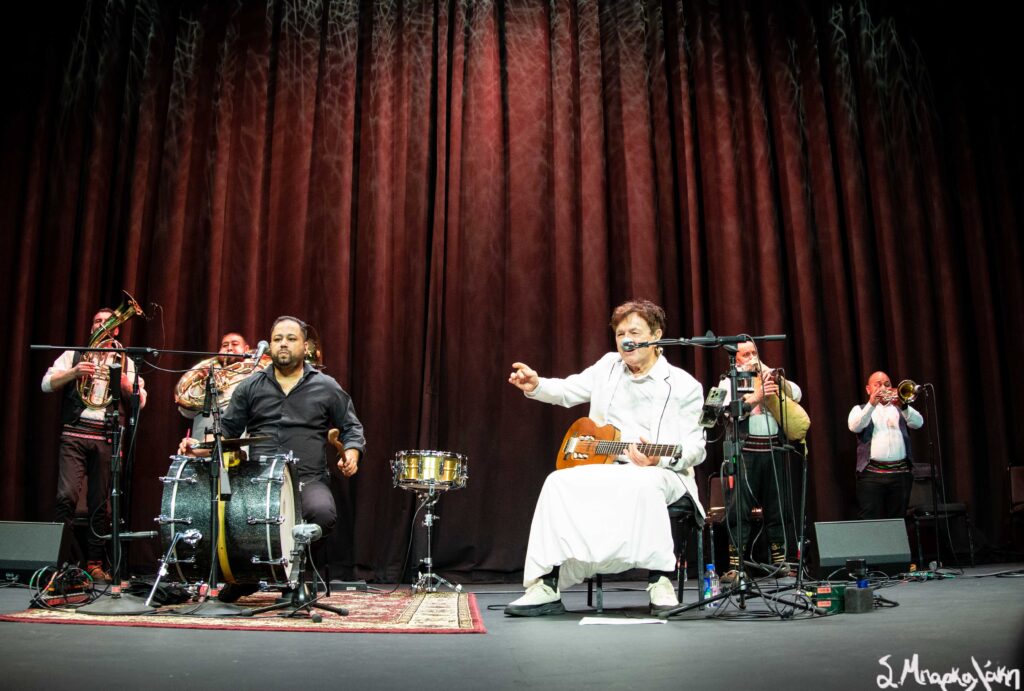
Walking out into the cool night air, the echoes of brass still ringing, it was clear why Goran Bregović remains one of the world’s most celebrated musical figures. His sound crosses borders, languages, and generations, proving once again that music, at its most powerful, is a force that refuses to be contained.